Assess · Plan · Act · Analyze
Knowing What to Do Next Should Be Simple.Here’s What It Actually Takes.
Four steps, then one priority followed through all of them: where it started, what got planned, what actually happened, and what changed as a result.
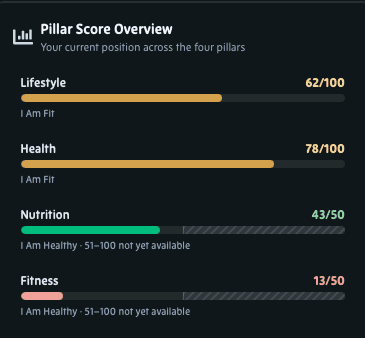
The Four Steps Are Easy to Name. Completing All Four Isn’t.
Nothing here is complicated on its own. The difficulty is that each step depends on the one before it being done honestly, and the last one depends on being able to read what you’re looking at.
01
Assess
Where you currently are. Not where you assume you are.
02
Plan
What matters most right now, and in what order.
03
Act
Doing it consistently, with the resources you actually have.
04
Analyze
What the results tell you, and what needs to change because of it.
Then back to Plan, with better information to carry into the next cycle. That cycle is the whole process. Most people never complete it once.
How One Priority Becomes a Plan, and Then a Better One.
One priority, followed through all four steps. Where it came from, what got scheduled, what actually happened, and what changed as a result.
Assess
Fitness is the lowest of the four pillars at 27, and the queue ranks it first: no movement days recorded in the last completed week, 16 minutes Active Minutes logged against a target of a 150 minutes.
The score breaks into the parts it was built from, each with the evidence behind it. The score is low because almost nothing is being recorded, which points at the first thing to fix. Getting sessions to happen at all comes before attempting to optimize the program.
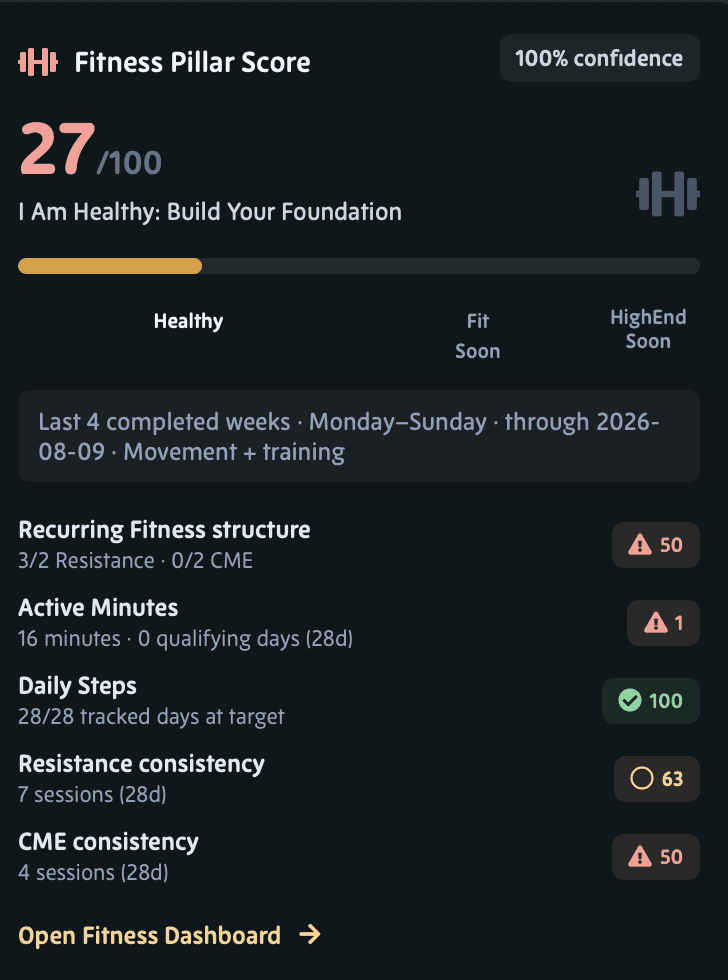
Each component carries its own measure, so the score can be taken apart rather than accepted. Plan
The priority becomes the structure of the week. Three sessions scheduled on specific days, at times in the calendar that have realistic availability.
Placement is the decision being made here. A session with no time attached is an intention. A session on Tuesday at 6:30 is a plan.
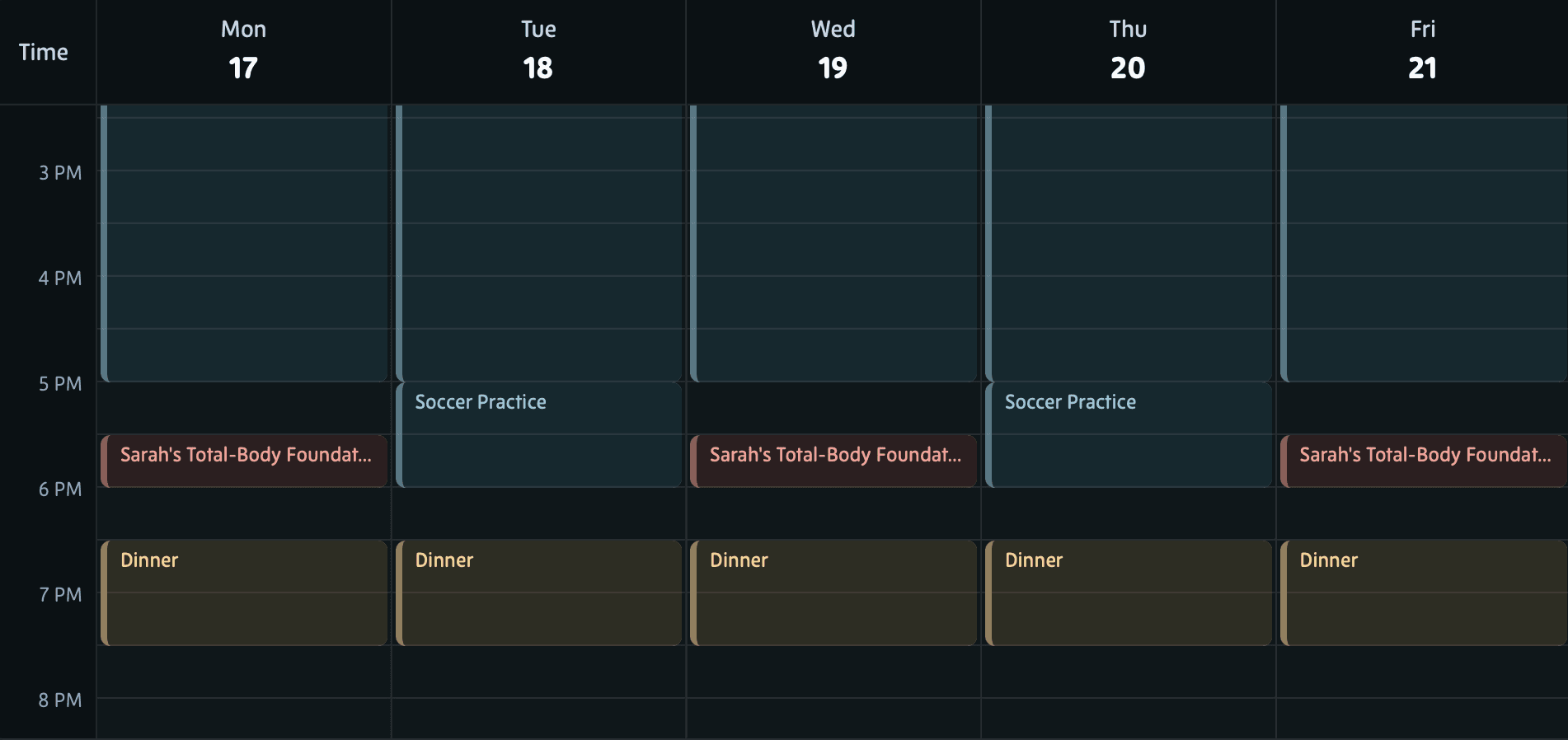
The week as it actually is, not as it would be if nothing else were happening. Act
One session, as performed. Every exercise, every set, the repetitions and load actually used.
This is the session as it happened rather than the session as it was written. A substituted exercise, a dropped set, a heavier top set than planned: all of it recorded, allowing for future analysis.
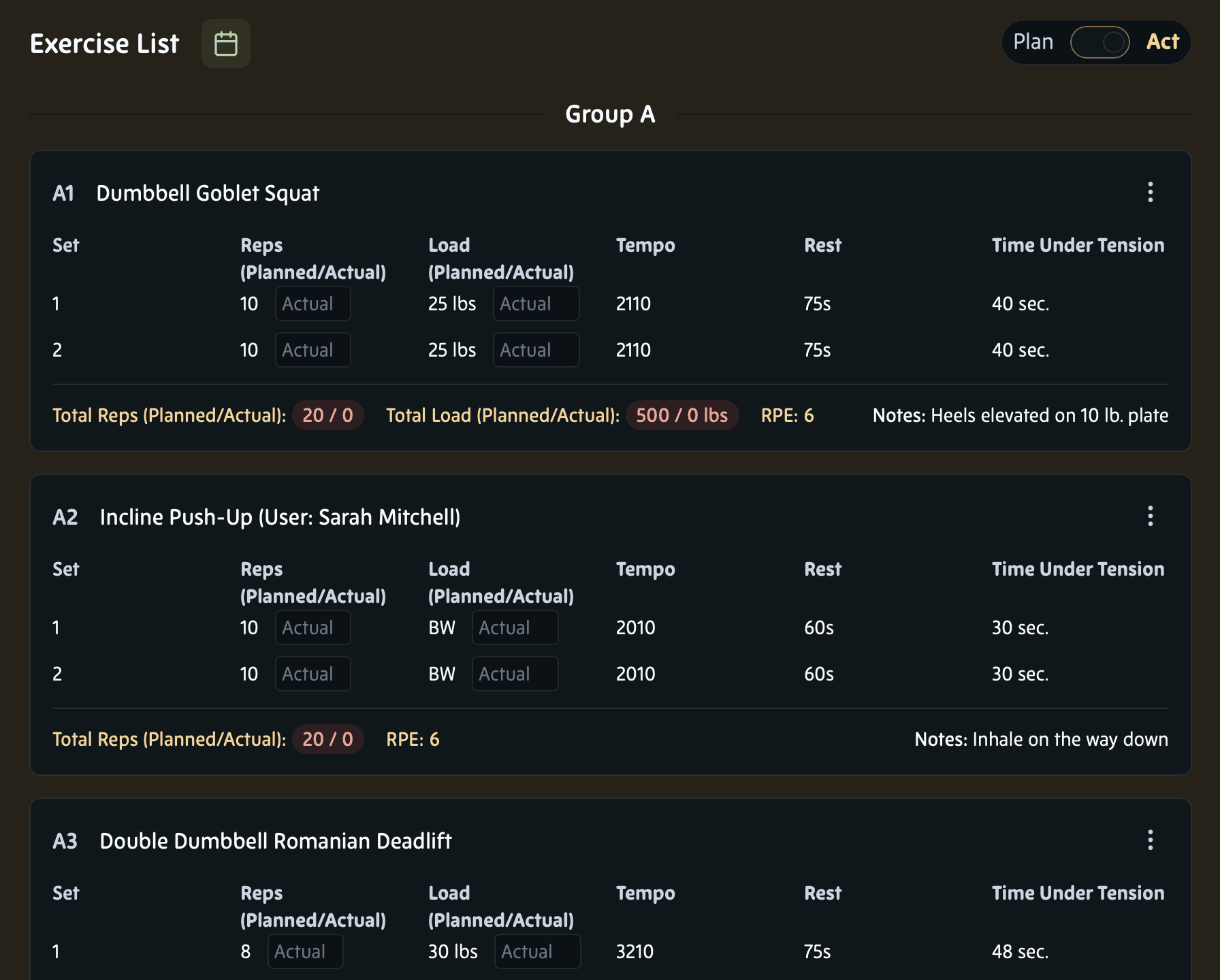
Recorded where it happened, while it was happening. Analyze
Planned work and completed work, side by side. Actual performance was more than the plan, so the next block moves up: 2.5% more load, 5% more volume.
Both figures are calculated from what was actually lifted. This makes the logging actionable, and progression easy to implement.
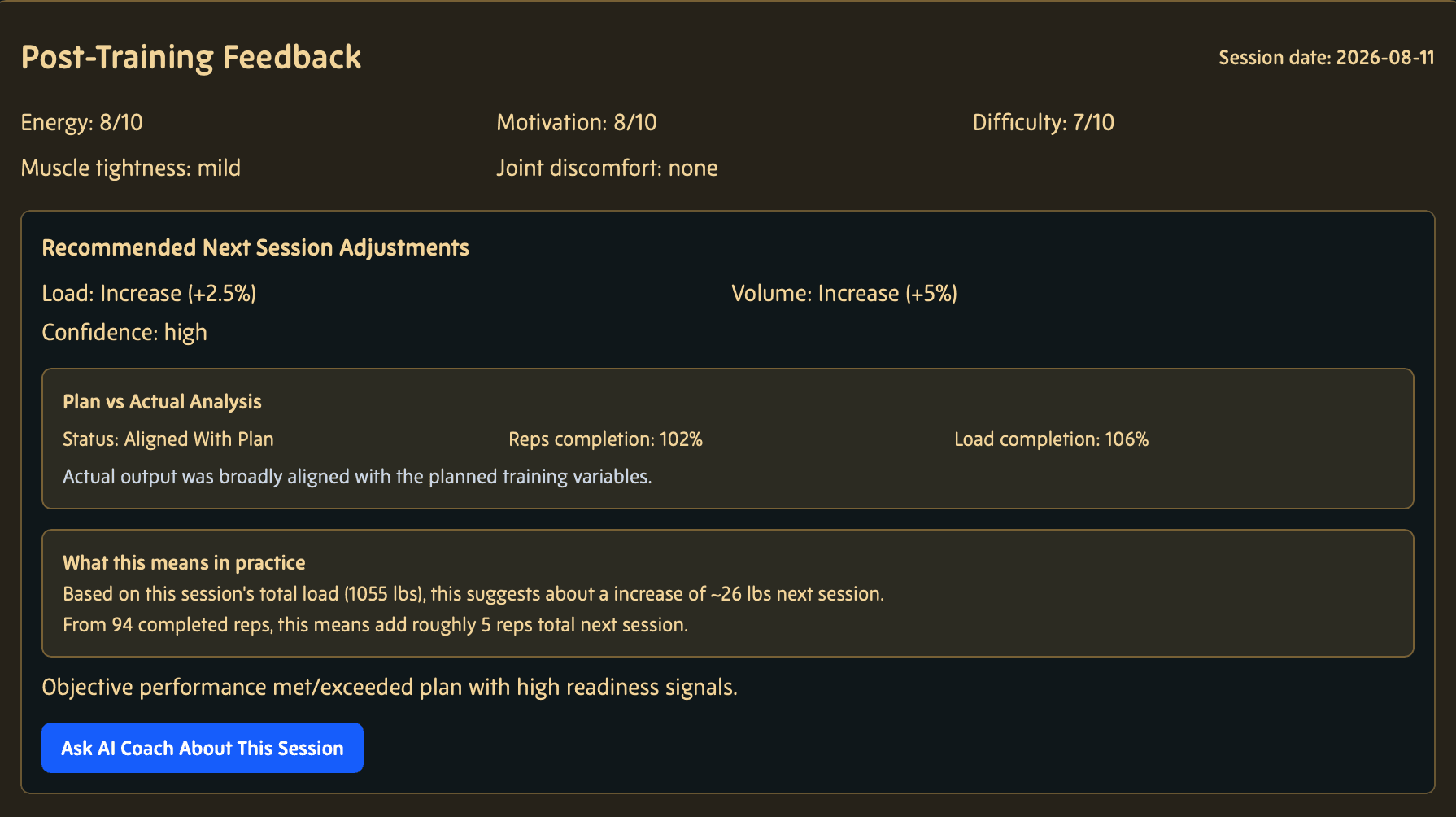
The next session is written from evidence, not from memory.
And you can ask about more than the session.
The AI Coach is available throughout the Platform: inside the tools themselves, in a floating window, and on a page of its own. Wherever you ask from, and with your permission, it can see your data across all four pillars. That access is what makes the range of questions possible.
Ask about the session you just finished, if you aren’t sure how to adjust from one to the next. Ask for a meal structure that fits the week you actually have. Ask something broader about what would move you toward achieving your goals. Nothing has to be explained first, because none of it is new to the Coach.
You don’t always have to ask. As the Coach finds connections between your data and what you’ve actually been doing, it shows them as Insights, in the places you already look.
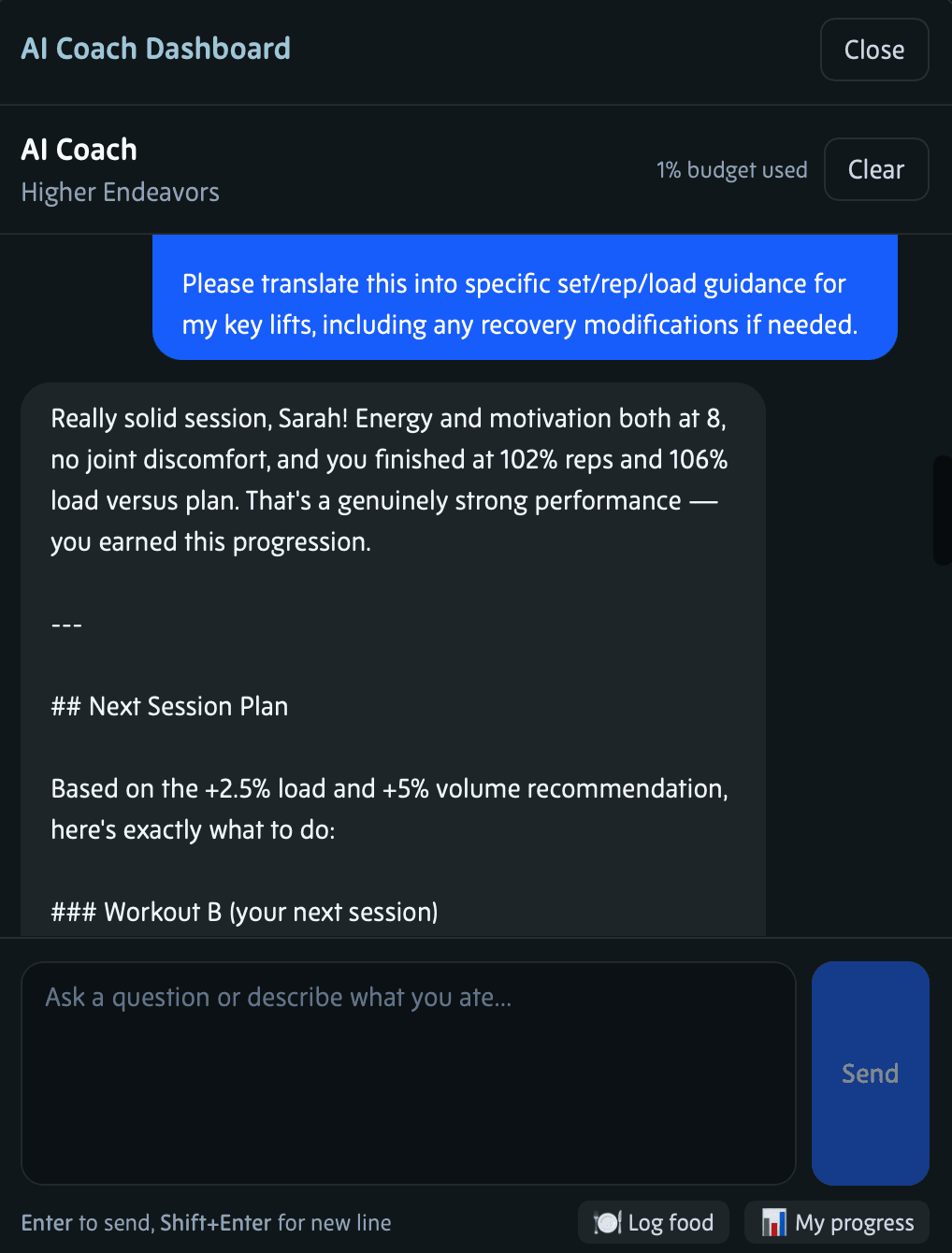
Then the queue moves.
The results of one block potentially changes what the next block should be about. The ranking is recalculated against everything the Platform can see, across every scored pillar, not just the one you were working in.
So the actions that surface next may be a reflection practice in Lifestyle or a recurring meal structure in Nutrition. What matters most is decided by impact, and what will help you achieve your goals.
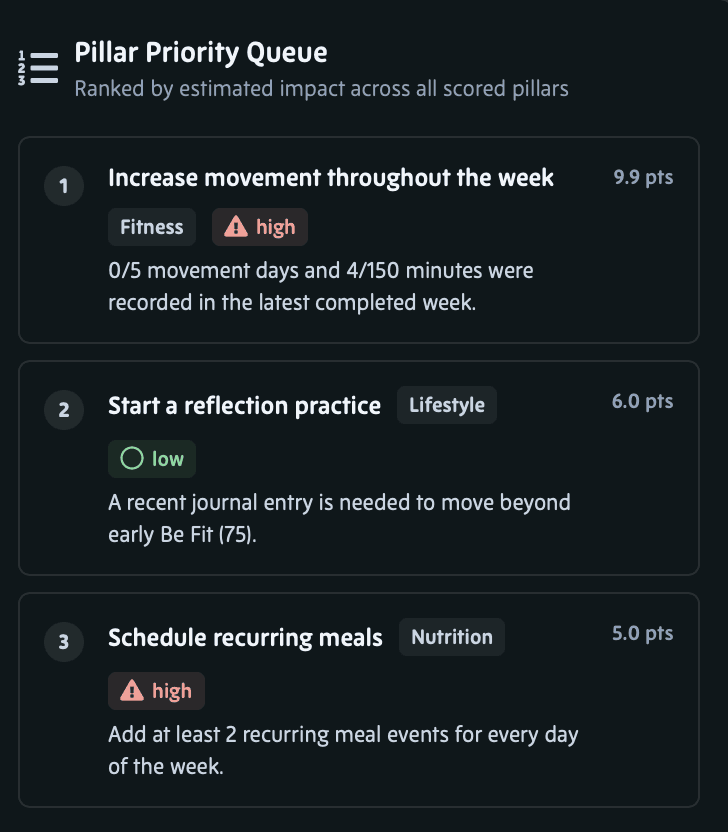
That’s the Process. Membership Is Where You Run It.
Everything above happens on the Platform, with the AI Coach included. How much support you want around it is the only decision left.
Or read more about any part of it first.
The Guide
Free, and open now. The principles behind every step above.
Start with the GuideThe Platform
The tools you just watched. Assessments, planning, scheduling, tracking, and your own data across all four pillars.
Explore the PlatformHighEnd Coaching
A coach who knows your history and your circumstances, to think it through with when the answer isn't obvious.
Apply for Coaching